Pilates Instructor Certification
Welcome to the Pilates Academy International!
Pilates Academy International (PAI) was founded in New York City in January 2006 by identical twin sisters Katherine and Kimberly Corp. Operating out of their prestigious Manhattan flagship studio, Pilates on Fifth, the sisters built PAI as a contemporary, highly adaptable, and comprehensive system of instructor education.
The PAI Difference
The PAI stands out for its commitment to instilling students with all the other (“intangible”) attributes you need to be successful.
To be an excellent, bankable Pilates instructor, you OF COURSE need to have comprehensive knowledge of the exercises. But on top of that, you need to be confident, display a professional presence, establish rapport with clients, adapt your teaching style according to your client and develop exceptional client retention skills.
We are proud to announce that Pilates Academy International's Comprehensive Teacher Training Program has been officially accredited by the Pilates Method Alliance International Teacher Training Accreditation Program (PMA-ITTAP).

Recognized Worldwide
Five Accrediting Bodies. One PAI Certification
ACE: American Council on Exercise
NASM: National Academy of Sports Medicine
AFAA: Athletics & Fitness Association of America
NPCP: National Pilates Certification Program
PAA: Pilates Association Australia
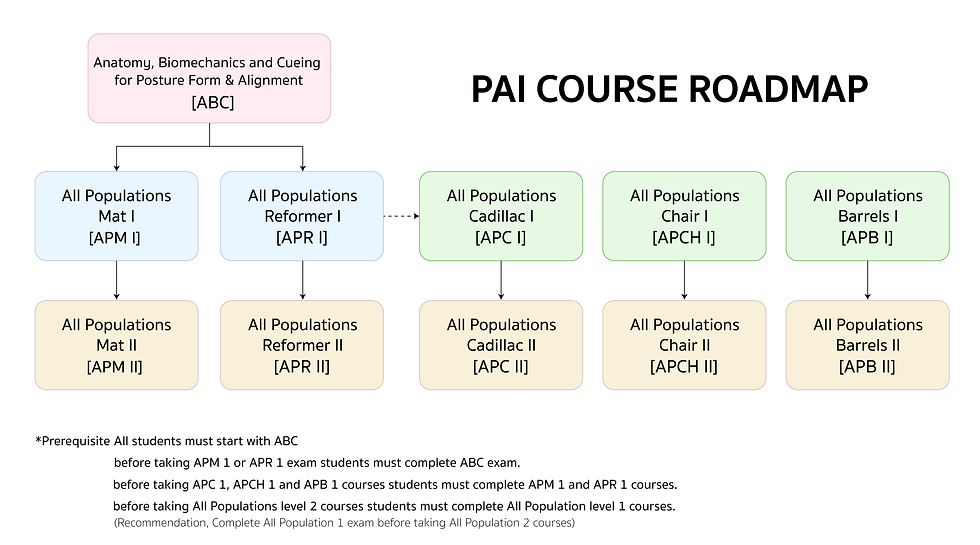
PAI Course Descriptions
-
Fundamental Execution of Each Exercise
-
Anatomy and biomechanics of each exercise
-
Exercise modifications, including regressions and progressions
-
Cueing and correcting skills
-
Creating workouts for all ages, genders and fitness levels
-
Teaching Group Classes
-
Teaching Private Sessions
Five tiers. One system. Twenty years of refinement.
Every PAI program is organized around our proprietary 5-Tier Progressive System — a framework refined over two decades of teaching real bodies in real studios. It gives our students something most teacher training programs do not: a structure you can use on day one.
The tiers progress: Beginner → Advanced Beginner → Intermediate → Advanced Intermediate → Advanced.
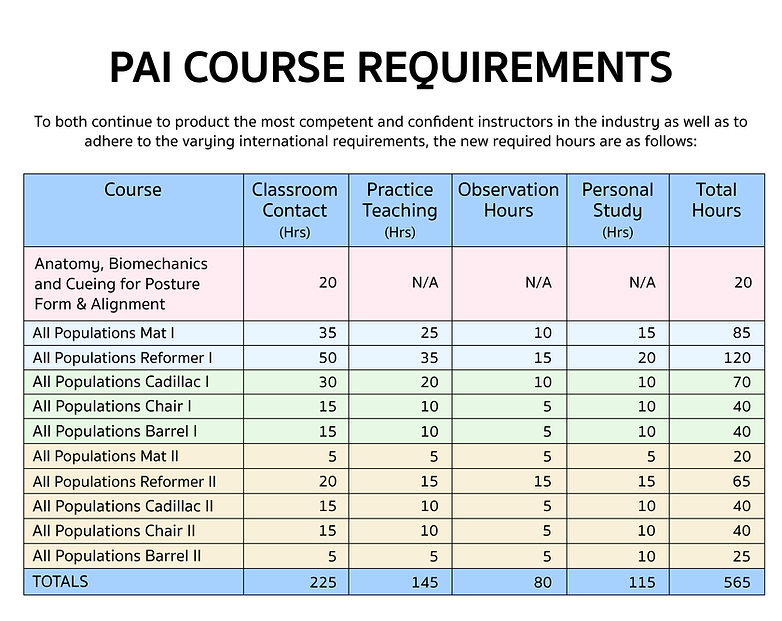
All Populations I covers the first three tiers — the work that prepares you to confidently teach the vast majority of clients walking into a real studio. All Populations II covers the final two tiers — for instructors ready to take their teaching toward mastery and serve the clients who want more.

ABC: Anatomy, Biomechanics, and Cueing for Posture, Form and Alignment
Before you can teach the body, you need to understand it. Anatomy, Biomechanics, & Cueing for Posture, Form & Alignment is not a stand-alone elective in the PAI curriculum it is the cornerstone that every other course is built upon. Students who complete this course before beginning apparatus training consistently report that it changes the way they see every exercise, every client, and every cueing decision they make.
Where many anatomy courses ask you to memorize structures, biomechanical principles, and text book cases, PAI's Anatomy, Biomechanics, & Cueing for Posture, Form & Alignment course asks you to apply them. Every bone, joint, and muscle group is taught in direct relationship to movement — specifically, to the movements you and your clients are already doing in day to day living. From Day 1, we focus on “Activities of Daily Living”, so that the body is understood through the lens of knowledge you already possess. By the time you complete this course, your anatomical vocabulary is not a set of memorized definitions. It is a living, usable framework.
All Populations Mat I
The mat is where Joseph Pilates started, and it remains the most elemental expression of his method. No springs, no straps, no apparatus — just the human body working intelligently against gravity. Mat I is where PAI students first encounter the full classical repertoire through the PAI lens: all 34 exercises, methodically taught, thoroughly modified, and designed for each and every body in every room.
The PAI approach to mat work is built around a fundamental belief that the classical repertoire is not reserved for the already-fit or the already-flexible. Through our five-tiered system, every classical exercise is taught alongside its stepping-stone progressions — modifications that build the strength, mobility, and body awareness the full movement requires. Clients move through the tiers naturally, always experiencing progress, never feeling out of place.


All Populations Reformer I
The reformer is the most recognized piece of Pilates apparatus in the world — and for good reason. Its spring-loaded carriage, adjustable resistance, and versatile attachment system create a training environment of extraordinary precision: one where exercises can be loaded and unloaded, supported and challenged, simplified and complexified in ways no other apparatus can match. Reformer I gives you a thorough, confident command of the machine, its mechanics, and its foundational exercise repertoire.
The PAI approach to reformer training is grounded in the same five-tiered system that underlies every PAI course. Every foundational exercise is taught alongside its steppingstones and progressions — so you understand not just how to teach the exercise, but how to meet each client at their level and take them forward. Reformer clients tend to be deeply loyal. The instructor who makes them feel capable and challenged in equal measure keeps them for years.
All Populations Cadillac I
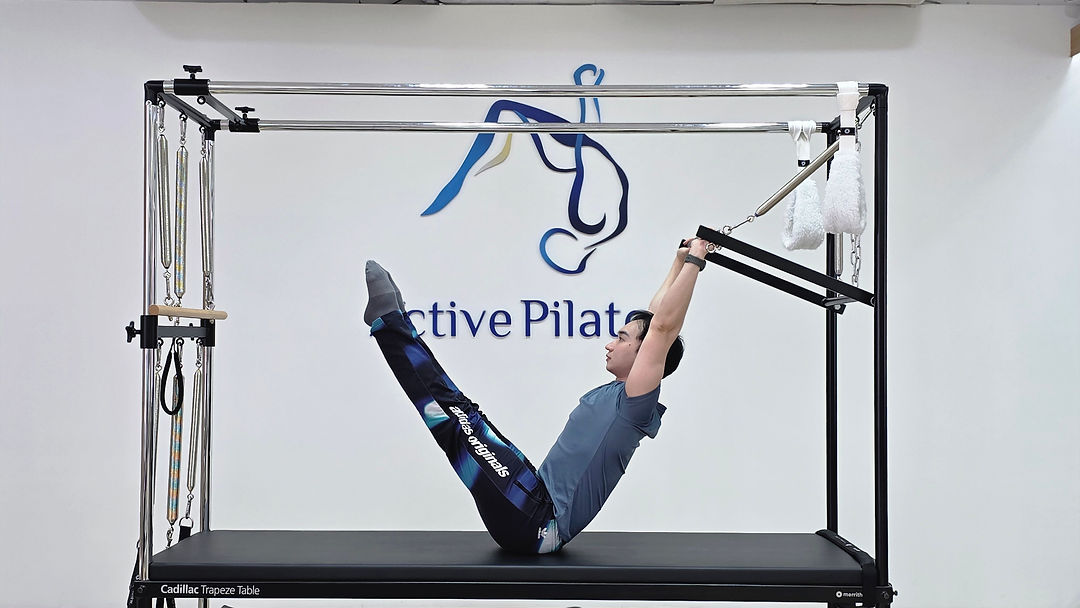
The Cadillac — also known as the Trapeze Table — is the most versatile piece of Pilates apparatus Joseph Pilates ever designed. Its array of bars, springs, and straps creates a movement environment that spans the full range from deeply therapeutic to athletically demanding. No other apparatus in the studio offers quite the same range of possibility — which is precisely why Cadillac-certified instructors tend to develop the most devoted private client practices.
All Populations Cadillac I teaches you to work fluently with the full apparatus: the roll down bar, the push-thru bar, the arm springs, legs springs, the trapeze. Each attachment has its own vocabulary of exercises, its own population of ideal clients, and its own set of modifications that make it accessible across the fitness spectrum.


All Populations Chair I
Do not let the compact size of the Wunda Chair/ Stability Chair fool you. Among all the Pilates apparatuses, the Chair delivers some of the most functionally demanding, neurologically complex, and surprisingly humbling work in the repertoire. BUT… it is as POLARIZING as it is unforgiving, so it is vital that instructors understand not just the exercises on the Chair, but also the physics of the chair. Spring choice matters with every exercise, as balance, lower extremity strength, full-body coordination, and postural control are all recruited — often simultaneously — in ways that translate directly to how clients move in daily life and athletic performance.
All Populations Chair I gives you a thorough command of the apparatus and its exercise vocabulary, from the foundational seated and supine work to the standing and balance sequences that define the Chair's unique contribution to the Pilates canon. The PAI approach ensures that every exercise is taught with its complete modification spectrum — so that the Chair is as useful for a 70-year-old working on fall prevention as it is for a competitive skier working on sport-specific training.
All Populations Barrels I
In a world where most clients spend hours each day rounded forward over devices and desks, the barrel family is among the most therapeutically necessary apparatus in the Pilates repertoire. Spine Corrector, Ladder Barrel, and Small Barrel each offer something the rest of the apparatus cannot: the curved surface that allows the spine to arch, the ribcage to open, and the posterior chain to release in ways that feel both deeply therapeutic and, for many clients, immediately revelatory. Additionally, the barrels offer an accessible pathway for clients to understand and fortify and deeper and more effective core connection.
All Populations Barrels I teaches you to work fluently with all three pieces — understanding what distinguishes each from the others, when to use which, and how to progress clients through the barrel repertoire with the same systematic intelligence that characterizes every PAI course. Spinal articulation, thoracic extension, lateral flexion, hip work, deep core stabilization and full-body integration are all addressed through the barrel lens.
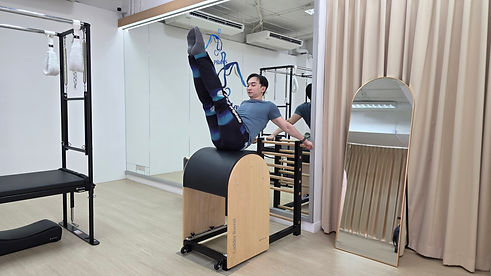

All Populations Mat II
All Populations Mat II is where the classical mat repertoire reveals its full scope. Building directly on the foundations of All Populations Mat I, this course takes instructors into the upper tiers of the PAI mat curriculum — more demanding movement, more sophisticated coordination, and the teaching skills to work with clients who are ready for advanced challenge.
If All Populations Mat I answers the question of what the classical repertoire is and how to make it accessible, Mat II answers the deeper question of what it can become. Advanced transitional sequences, dynamic integration of breathwork and imagery, and the programming intelligence to design sessions that both challenge and build — these are the tools All Populations Mat II puts in your hands.
All Populations Reformer II
All Populations Reformer II is where the full scope of the classical reformer repertoire comes into focus. Building on the confident foundation of Reformer I, this course takes instructors into the most sophisticated and demanding work the apparatus has to offer – complex movements, advanced sequencing, full-body integration, and the programming intelligence to design sessions that genuinely challenge experienced movers.
The advanced reformer is a different teaching environment than the foundational one — both more difficult and more nuanced. The clients who are ready for tiers 4 & 5 of the PAI curriculum tend to be experienced, demanding, and highly attuned to their own bodies. They need instructors who can match their level and continue to push it.


All Populations Cadillac II
All Populations Cadillac II is where the Trapeze Table reveals its full expressive range. Building directly on the foundation of All Populations Cadillac I, this course takes instructors into the upper tiers (Tiers 4 & 5) of the PAI Cadillac curriculum — the exercises that demand a superior amount of strength as well as advanced neuromuscular coordination.
The advanced Cadillac is a different teaching environment than the foundational module, All Populations Cadillac I — both more demanding and more nuanced. The clients who are ready for tiers 4 & 5 of the PAI curriculum tend to be experienced, strong, and highly attuned to how their bodies move through space. They need an instructor who can load, motivate, and challenge them intelligently while never losing sight of safety.
All Populations Chair II
All Populations Chair II is where the deceptive little Wunda Chair shows its full ambition. Building directly on the foundation of All Populations Chair I, this course takes instructors into Tiers 4 & 5 of the PAI Chair curriculum — advanced standing and balance sequences, complex spring adjustments for maximum efficacy, and the neurologically demanding core work that makes the Chair one of the most humbling apparatuses in the repertoire.
All Populations Chair II is a different teaching environment than the foundational one — more demanding both in terms of strength for the client and knowledge of the physics of the chair for the instructor. The clients who are ready for tiers 4 & 5 of the PAI curriculum tend to be strong, coordinated, and eager for challenge. They need an instructor who can sequence advanced work with precision while adjusting the springs appropriately to meet the client where they are.
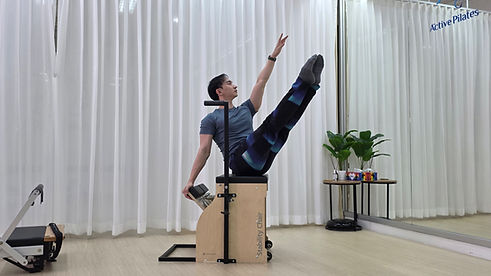

All Populations Barrels II
All Populations Barrels II is where the barrel family reveals its full expressive range. Building directly on the foundation of All Populations Barrels I, this course takes instructors into the upper tiers (Tiers 4 & 5) of the PAI Barrels curriculum — advanced core work on the Ladder Barrel, the most demanding Spine Corrector sequences, and the flexibility and full-body integration work that the barrels make uniquely possible.
The advanced barrel work requires significantly more core strength, neuromuscular coordination and body awareness than the All Populations Barrels I repertoire, and it is essential that instructors are able to guide their clients to progress them effectively.